How to Stop Foreclosure in South Atlanta: A Homeowner's Guide
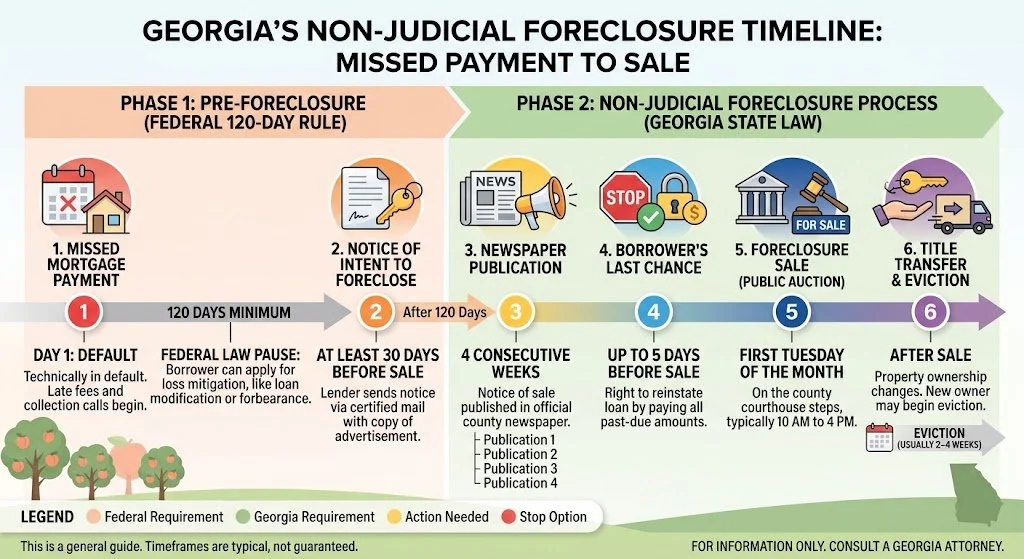
If you've fallen behind on your mortgage, you've probably noticed something unsettling about how fast things can move in Georgia. Unlike many other states, Georgia doesn't require a lender to go through court to foreclose on a home — which means the process can happen faster than most homeowners expect.
If you're facing foreclosure in South Atlanta, here's what you need to know about the timeline, your options, and how to protect yourself.
This article is for general informational purposes only and isn't legal or financial advice. Every situation is different — for guidance specific to your circumstances, consult a licensed Georgia attorney or a HUD-approved housing counselor.
Understanding Georgia's Foreclosure Process
Georgia is a non-judicial foreclosure state, meaning a lender doesn't need a judge's approval to foreclose — most mortgages include a power-of-sale clause that allows the lender to sell the property directly.
The general process typically looks like this:
A notice of default is issued after missed payments
The lender sends a written notice of intent to foreclose
The sale is advertised for four consecutive weeks in a local publication
The home is sold at a public auction on the first Tuesday of the month, usually at the county courthouse
Once a non-judicial foreclosure sale is complete in Georgia, it generally cannot be reversed, and there is no post-sale redemption period. That's what makes acting early so important.
Signs You're Heading Toward Foreclosure
It's not always obvious how close a foreclosure really is. Some common warning signs include:
You've missed one or more mortgage payments
You've received a notice of default or an intent-to-foreclose letter
Communication from your lender has shifted from payment reminders to formal legal notices
You're unsure whether you can still reinstate the loan before a sale date is set
Options That May Help Stop or Delay Foreclosure
Depending on how far along the process is, a few different paths may still be available.
Reinstating the loan means paying the total overdue amount, plus any fees, before the sale date — this brings the loan current and stops the foreclosure.
Loan modification or forbearance involves working directly with your lender to change the loan terms or temporarily pause payments. This can buy time, but it requires lender approval and doesn't always succeed.
Selling the home before the sale date is often the most practical option for homeowners who can't reinstate or modify the loan in time. This includes selling to a direct cash buyer, which can close in days rather than months.
Bankruptcy can trigger an automatic stay that temporarily pauses foreclosure, but it's a legal process with long-term consequences of its own — not a standalone fix.
Why Selling Before the Sale Date Is Often the Most Practical Option
For many homeowners facing a tight timeline, a traditional home sale — with repairs, showings, and a buyer relying on financing — simply takes longer than the foreclosure clock allows.
Selling directly, as-is, to a cash buyer can:
Close in a matter of days instead of months
Avoid the cost and time of repairs or staging
Stop the foreclosure process before the sale date, which can help protect your credit compared to letting a foreclosure complete
What Happens If the Home Is Not Sold in Time
If no action is taken before the sale date, the home is auctioned publicly on the first Tuesday of the month. Once that sale is final, it generally can't be undone, and the new owner can begin eviction proceedings (called a dispossessory action in Georgia) shortly after.
Frequently Asked Questions
Can you stop a foreclosure once it has started in Georgia? In many cases, yes — options like reinstating the loan, negotiating a modification, or selling the home before the sale date can stop the process, but the window to act narrows quickly once notices have been issued.
How long does foreclosure take in Georgia? Georgia's non-judicial process can move quickly, often completing within a few months of the first missed payment, since the state doesn't require court approval and follows a set notice-and-sale timeline.
Does selling my house stop foreclosure? Yes — if the sale closes before the scheduled foreclosure auction, it stops the process, which is why many homeowners in this situation consider a fast, as-is sale to a direct buyer.
Final Thoughts
Georgia's foreclosure timeline moves faster than most homeowners expect, which makes early action the most important factor in how many options remain available. Whether that means reinstating the loan, negotiating with your lender, or selling the home quickly, understanding where you stand in the process is the first step.
If you're facing foreclosure in South Atlanta and want to talk through a fast, flexible way to sell, reach out for a no-obligation conversation about your options at southatlantahomeoffers.com/blog.
